

Description
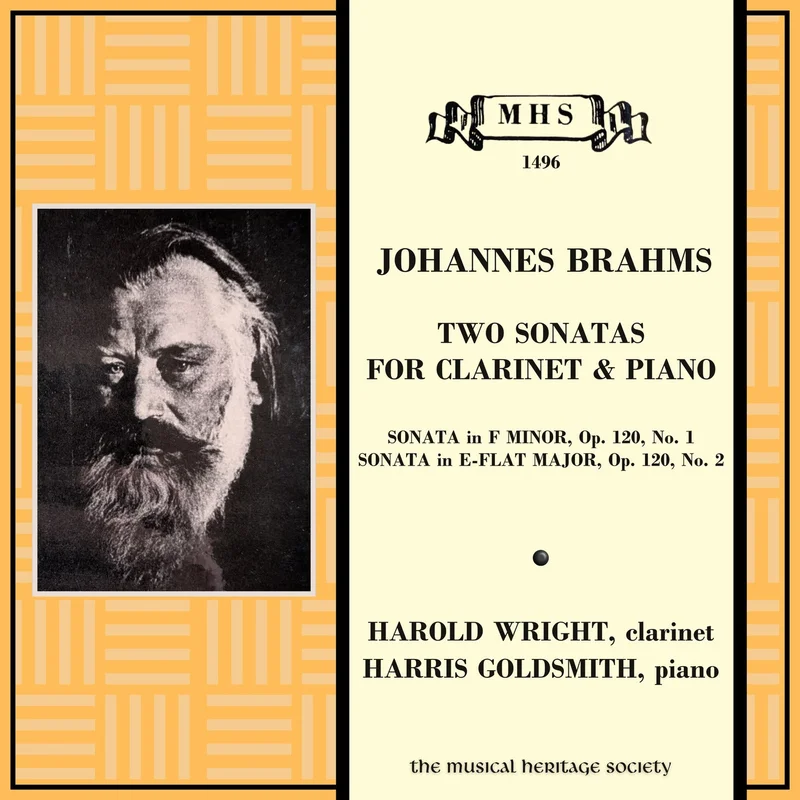
As Brahms, the inveterate yet ambivalent bachelor, probably looked upon his compositions as “Children,” it may not be amiss to cite the two sonatas here recorded as change-of-life babies! Evidence leaves little doubt that their creation in 1894 was not to have been taken for granted. As early as 1888 Florence May described Brahms as “looking an old man.” She said that “though he was only 55, his hair was nearly all white and he had grown very stout. Yet he wore the happy, sunshiny look of one who had realized his purpose and was content with his share in life.” In 1890, the surgeon Theodor Billroth reported of his intimate that “he rejects the idea he is composing or will ever compose again.” Indeed, Brahms himself had proclaimed the identcal sentiment firsthand when he sent the manuscript of his G Major String Quintet to his publisher Simrock along with a note saying “the time has now come for you to say goodbye to any further compositions of mine.’”
Incentive was restored by a visit to the Duke of Meiningen in March of 1891. The rejuvenating catalyst was a superb clarinetist in the orchestra there named Richard Mhlfeld. Brahms was captivated by the man’s gentle, affable nature and succumbed to his exquisite artistry. He affectionately dubbed Mhlfeld “my prima donna” and “Frulein Nightingale.” We’ll let the biographers ponder over Brahms’ curious usage of gender: the musical upshot of his association with Mhlfeld was clearly advantageous, for posterity gained not only the oeuvre under discussion but a somewhat diffuse trio and an altogether consummate quintet as well.
Reviews
There are no reviews yet.