



Description
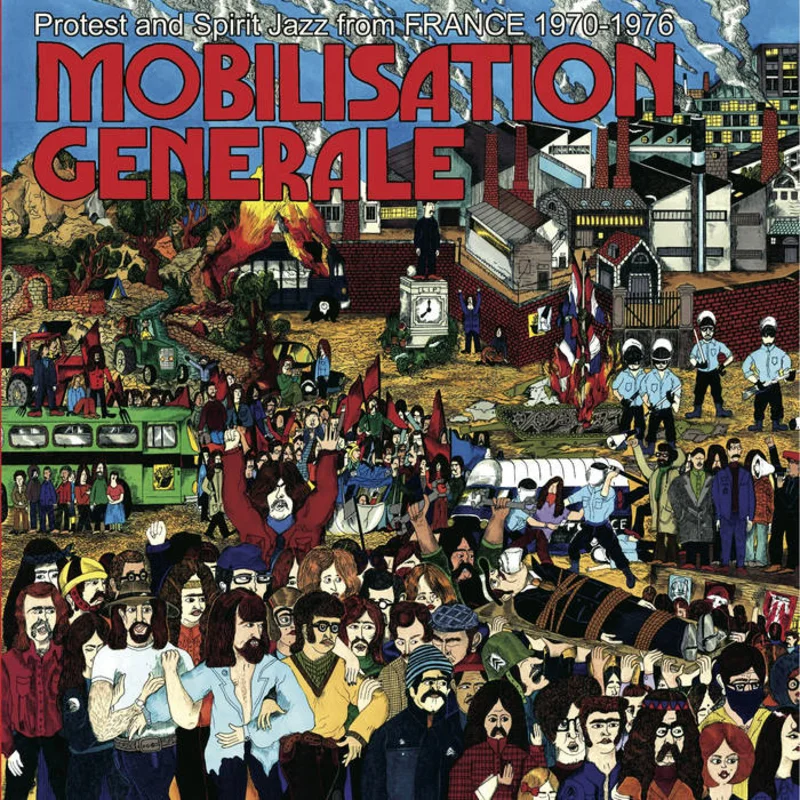
2024 repress; double LP version. Comes in a gatefold sleeve. 1968. France, Incorporated. The entire building was being consumed by flames and was slowly collapsing. Nothing would survive. Out of the rubble of the old world jumped the children of Marx and Coca-Cola, ripping the white and blue stripes off the French flag. Yet, the socialist revolution was more mythic than real and music did nothing to mitigate people’s behavior. It was time for innovation. While singles fromThe Stones,The Who,The KinksandMC5provided an incendiary soundtrack for the revolution, it was Black Americans who truly blew the world from its foundations in the ’60s.Ornette Coleman,Cecil Taylor,Eric Dolphy,Albert Ayler, andArchie Sheppleft behind the jazz of their fathers’ generation, liberating the notes, trashing the structures, diving headfirst into furious improvisations, inventing a new land without boundaries — neither spiritual nor political. Free jazz endowed the saxophone with the power to destroy the established order. In 1969, theArt Ensemble Of Chicagoarrived at the Thtre du Vieux Colombier in Paris and a new fuse was lit. Their multi-instrumentalism made use of a varied multiplicity of “little instruments” (including bicycle bells, wind chimes, steel drums, vibraphone and djembe: they left no stone unturned), which they employed according to their inspirations. The group’s stage appearance shocked as well. They woreboubous(traditional African robes) and war paint to venerate the power of their free, hypnotic music, directly linked to their African roots. They were predestined to meet up with the Saravah record label (founded in 1965 byPierre Barouh), already at the vanguard of as-yet unnamed world music.Brigitte Fontaine‘s albumComme la radio, recorded in 1970 after a series of concerts at the Thtre du Vieux Colombier, substantiated the union of this heiress to the poetic and politically-committed chanson franaise with the Art Ensemble Of Chicago’s voodoo jazz and the Arab tradition perpetuated by her companionAreski Belkacem. A UFO had landed on the turntables of French teens, who were discovering underground culture via publications likeActuel,Libration,Charlie Hebdo,Rock & Folkand a vigorous free press. For 20 year-olds in the early 1970s, making music was a political act; they grabbed a microphone to advance a cause, not to become rock stars. While the price of oil skyrocketed and Pompidou went overboard building horrible concrete apartment buildings for public housing and “adapting the city for the automobile,” some took refuge in the countryside. Alternative communities formed all across France, giving rise to groups (or rather, collectives) with open-minded structures, cheerfully mixing music, theatrical happenings and agitprop, along with a good dose of acid. Projects bordering on the ridiculous were often tolerated (progressive rock was one of the primary banalities the era produced), while those who followed the route paved by spiritual jazz often ended up elsewhere. The vehemence (if not grandiloquence) of their declarations was carried and transcended by the finesse and brilliance of their musicianship. Simultaneously spatial, pastoral and tribal, the tracks in this collection represent an ideal intersection between a sort of psychedelic legacy, the space jazz ofSun Raand Afro Beat (then being created byFelain Lagos): they are as much incantations (often driven by the spoken-word), war cries or poems as they are polemics. 1978.Giscardwas at the helm. Punk and disco were busily decapitating the last remaining hippies. Peoples’ blood was still boiling, but it was already too late. The war was over, lost without anyone noticing. Nevertheless, people still tilted at windmills or talked tough in dead-end struggles; a dream is not so far from a nightmare. We knew that an enchanted era had ended, the hope for a brighter future was now behind us and that we would leave behind nothing for our children but a few records. Indeed, ghosts may still crackle from our speakers, as the 45 spins and Brigitte Fontaine asks Areski: “H mais je pense un truc, on ne va pas mourir dans une minute?” (trans. “Hey, I was just thinking, aren’t we going to die in a minute?”). Features artists such asAlfred Panou & Art Ensemble Of Chicago,Brigitte Fontaine & Areski Belkacem,Atarpop 73 & Le Collectif Le Temps Des Cerises,RK Nagati,Frdric Rufin & Raphal Lecomte,Franois Tusques,Mahjun (Mouvement Anarcho Hroque des Joyeux Utopistes Nbuleux),Full Moon Ensemble,Baroque Jazz Trio,Michel Roques,Chne Noir, andBeatrice Arnac.
Reviews
There are no reviews yet.